
ZATCA’s first procedural guide turns the Kingdom’s zone incentives from announcement into practice. For manufacturers, shipbuilders, logistics operators and cloud businesses, the terms are worth a serious look, provided the substance is real.
ZATCA’s first procedural guide turns the Kingdom’s zone incentives from announcement into practice. For manufacturers, shipbuilders, logistics operators and cloud businesses, the terms are worth a serious look, provided the substance is real.
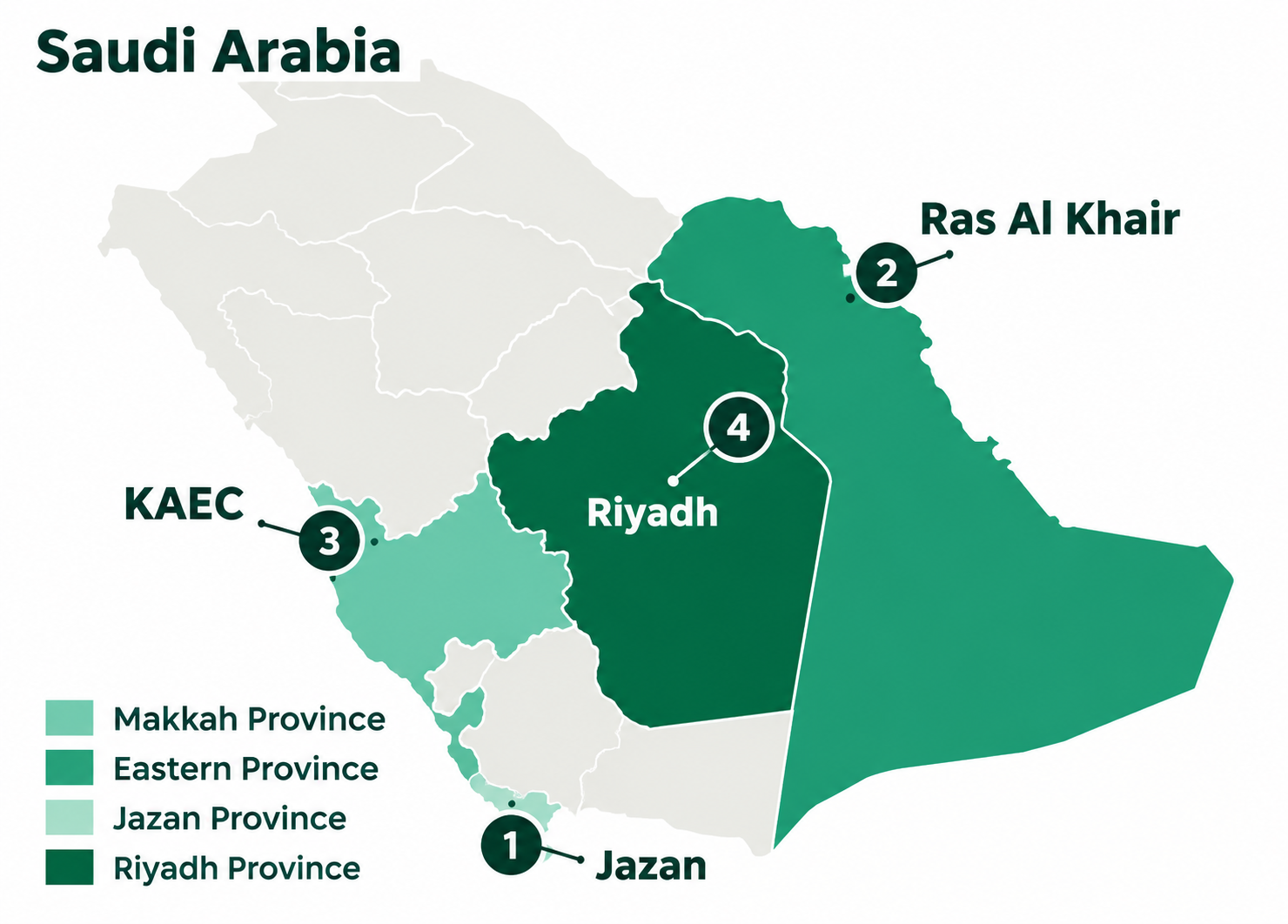
ZATCA’s (ZAKAT Tax and Custom authority) first procedural guide, which covers King Abdullah Economic City (KAEC) in Makkah Province, Ras Al Khair in the Eastern Province, Jazan in Jazan Province and the Cloud Computing zone in Riyadh. It tells investors how the incentives are meant to work in practice, and that is the information a board needs before committing capital.
A twenty-year horizon on income tax
The headline is the corporate income tax rate. Qualifying income in KAEC, Ras Al Khair and Jazan is taxed at 5% for 20 years, against the standard 20%. The Cloud Computing zone is treated differently. Ordinary tax legislation applies there, with available incentives taken into account, and the regulations do not promise the 5% rate.
A company building a plant, a shipyard or a logistics hub is making a two-decade decision. A tax cost that can be forecast over that period is worth more than an attractive rate that may be revisited in year six.
Zakat, withholding tax and cross-border flows
Saudi and GCC-owned entities in the zones move onto the income tax regime instead of Zakat. Regional groups that have long reconciled two systems will value the simplification. Qualifying cross-border payments also benefit from a withholding tax exemption, although annual reporting is still required. Exempt is not the same as unreported, and advisers should say so early.
VAT and customs
Supplies within a zone, between zones, and qualifying supplies from the rest of the Kingdom can be zero-rated for VAT. Imports from outside Saudi Arabia fall outside the scope of VAT, and customs duties are suspended for qualifying goods placed under a suspension procedure. That suspension is not a permanent exemption. Goods moving from a zone into the mainland are treated as a normal import.
The special VAT treatment depends on the customs suspension and a clear link to the licensed activity. It does not cover every service or every domestic sale.
Incentives beyond tax
The non-tax terms are easy to overlook, yet for a business with imported inputs and an export-facing model they can carry as much weight as the headline rate.
- Phased Saudization: none in years one to five, 15% in years six to ten, and a gradual increase thereafter, subject to applicable flexibility.
- Exemption from levies on expatriate employees and accompanying family members.
- A service centre and digital One Stop Shop to support licensing.
- Provision for licensed bonded storage and re-export zones.
Substance decides everything
The guide is clear about what it expects to see on the ground, and the conditions are strict.
- Real premises, real staff, genuine operating expenditure and a management presence in the zone.
- Supporting activities are excluded from the incentives, and location alone does not establish eligibility.
- Minimum investment thresholds of SAR 1.5 million to SAR 2.5 million, depending on zone and sector, measured as capital expenditure and not share capital.
- Qualitative eligibility criteria on top of the financial thresholds.
Related-party arrangements need equal care. Payments are assessed against OECD-aligned transfer pricing principles, and treaty permanent establishment rules continue to apply. One point of comfort for foreign cloud businesses: the use or storage of data in Saudi data centres does not, by itself, create a virtual permanent establishment.
Where this leaves investors
Taken together, the rate, the duration, the payment exemptions and the labour relief make a credible structure for serious operators.
KEY TAKEAWAYS
- Qualifying income in KAEC, Ras Al Khair and Jazan is taxed at 5% for 20 years. The Cloud Computing zone follows ordinary tax legislation.
- Saudi and GCC-owned entities move to the income tax regime instead of Zakat.
- Withholding tax relief applies to qualifying cross-border payments, with annual reporting still required.
- Zero-rated VAT and customs suspension stop at the zone boundary. Movement into the mainland is a normal import.
- Incentives depend on real premises, staff, operating expenditure and management presence.
The views expressed in this article are those of the author and do not necessarily represent the views or official position of the ICAI Muscat (Oman) Chapter or ICAI. The article is intended for general information only and should not be relied upon as professional advice. Refer Disclaimer on Index page as well.
Disclaimer: Content posted is for informational and knowledge sharing purposes only, and is not intended to be a substitute for professional advice related to tax, finance or accounting. The view/interpretation of the publisher is based on the available Law, guidelines and information. Each reader should take due professional care before you act after reading the contents of that article/post. No warranty whatsoever is made that any of the articles are accurate and is not intended to provide, and should not be relied on for tax or accounting advice.Contributor
CA Devang Mehta, CPA (Ireland) is a Tax and Compliance professional with over 10 years of experience advising businesses across the GCC, with a particular focus on the Kingdom of Saudi Arabia and the UAE. He currently serves as Compliance Manager at a consulting firm in UAE, where he advises multinational companies and regional businesses on Corporate Tax, VAT, Withholding Tax, Zakat, and regulatory compliance.
Devang has extensive experience assisting foreign investors with Company Formation, Regional Headquarters (RHQ) formation in Saudi Arabia, including entity structuring, MISA licensing, tax registrations, ongoing compliance, and governance requirements. He regularly advises clients on KSA Corporate Tax, VAT, transfer pricing, and regulatory obligations to help businesses establish and operate efficiently in the Kingdom.
A Chartered Accountant from India and Certified Public Accountant (CPA) from Ireland, Devang has also worked with KPMG India in Risk Advisory and has led numerous cross-border tax and compliance engagements across the GCC
Related Posts

Withholding Tax (WHT) is a direct tax deducted from amounts paid to a nonresident for services who ...
Read More